

Last updated: July 6, 2026
If your dog’s back legs are giving out, the most important question is not “Is my dog getting old?” It is “Did this happen suddenly, is my dog in pain, and can my dog still stand, walk, pee, and poop normally?” The answer tells you whether this is an emergency or a problem to discuss with your veterinarian soon.
Quick answer: what does it mean when a dog’s back legs give out?
When a dog’s back legs give out, it usually means the rear limbs are not getting enough strength, coordination, pain-free joint movement, or nerve control to support the body. Common possibilities include arthritis, hip problems, knee injury, intervertebral disc disease, spinal cord disease, degenerative myelopathy, trauma, tick-related illness, toxin exposure, or a whole-body illness that makes the dog weak.
Sudden collapse, dragging the back legs, severe pain, knuckling, inability to stand, or loss of bladder or bowel control should be treated as urgent. Keep your dog still, prevent slipping, avoid forcing movement, and call a veterinarian or emergency clinic right away.
When back-leg weakness is an emergency
Do not wait to “see if it gets better” if your dog suddenly cannot use the back legs normally. Some causes of sudden hind-leg weakness can worsen quickly, especially when the spine, spinal cord, nerves, blood flow, or bladder control is involved.
Call an emergency vet now if you see any of these signs
- Your dog cannot stand, cannot walk, or keeps collapsing.
- The back legs drag behind the body.
- Your dog walks on the tops of the paws or the paws fold under.
- There is sudden severe pain, crying, trembling, panting, or guarding the back.
- Your dog loses bladder or bowel control.
- Weakness gets worse over minutes or hours.
- Your dog had a fall, jump, car accident, rough play injury, or possible toxin exposure.
- Your dog’s gums are pale, breathing is abnormal, or the whole body seems weak.
Emergency veterinary sources recommend fast evaluation for sudden hind-leg paralysis or rapidly worsening weakness because nerve and spinal problems can become harder to treat if movement, sensation, or bladder function deteriorates. See Garden State Veterinary Services’ emergency guidance on sudden hind-leg paralysis.
What to do at home in the first 10 minutes
The safest home response is simple: reduce movement, prevent slipping, observe clearly, and call your vet if the weakness is sudden, painful, or worsening.
| Step | What to do | Why it matters | What not to do |
|---|---|---|---|
| 1. Stop activity | Move your dog to a quiet, flat area. Keep other pets away. | Jumping, twisting, or struggling can worsen some spinal or joint injuries. | Do not ask your dog to “walk it off.” |
| 2. Prevent slipping | Place rugs, yoga mats, or towels under the feet. | Weak back legs often fail faster on hardwood, tile, and slick floors. | Do not drag your dog across the floor. |
| 3. Check pain and function | Watch whether your dog can stand, place the paws normally, wag the tail, pee, and move without crying. | These details help your vet decide urgency and likely causes. | Do not pinch toes or test pain aggressively at home. |
| 4. Use gentle support | For short potty breaks, support the hips with a towel sling or rear lift harness. | Rear support reduces falls while keeping weight off painful or weak legs. | Do not lift only by the tail, hips, or collar. |
| 5. Call your vet | Describe when it started, whether it was sudden or gradual, and whether pain, dragging, or bladder changes are present. | Sudden weakness often needs same-day or emergency care. | Do not give human pain medicine unless your vet specifically tells you to. |
For mild, gradual weakness
If your dog is still walking, eating, comfortable, and only occasionally slipping or sitting down, schedule a veterinary exam soon. Home changes can help, but they should not replace diagnosis. Many rear-leg problems are easier to manage when they are caught before the dog loses mobility.
What the pattern of weakness can tell you
Owners often describe every case as “my dog’s back legs are giving out,” but the pattern matters. A dog that slowly wobbles over months is different from a dog that suddenly drags both back legs after jumping from a couch.
| What you see | Possible meaning | How urgent it is | What to tell the vet |
|---|---|---|---|
| Sudden collapse or dragging | Possible spinal disc problem, trauma, clot-like event, toxin, tick-related illness, or severe pain response. | Emergency, especially if your dog cannot stand or is painful. | Exact start time, recent jump/fall, pain signs, bladder control. |
| Slow wobbling over weeks or months | Possible arthritis, hip disease, muscle loss, degenerative myelopathy, or chronic spine disease. | Vet visit soon; urgent if suddenly worse. | Which leg started first, nail scuffing, falling frequency, stairs difficulty. |
| Back feet knuckle under | Often suggests poor paw-position awareness, which can point toward nerve or spinal cord involvement. | Same-day vet call; urgent if sudden. | Video of walking from the side and behind. |
| Hard time rising but improves after warming up | Often seen with arthritis, stiffness, or muscle weakness, especially in senior dogs. | Vet appointment; pain control and home safety matter. | Morning stiffness, slipping surfaces, weight, current medications. |
| One back leg suddenly held up | Possible knee injury, hip injury, paw injury, fracture, or painful soft-tissue injury. | Same-day vet call if non-weight-bearing or painful. | Which leg, swelling, yelp, activity before injury. |
| Weakness plus fever, vomiting, pale gums, or unusual breathing | Could be a whole-body illness rather than a simple leg problem. | Emergency or urgent care. | All symptoms, appetite, water intake, possible toxins, tick exposure. |
Common causes of dog back legs giving out
The list below does not diagnose your dog. It helps you match what you are seeing at home with the kind of conversation you should have with your veterinarian.
| Possible cause | Typical clues owners notice | Why it can make back legs give out | Helpful source |
|---|---|---|---|
| Intervertebral disc disease or spinal disc injury | Sudden pain, reluctance to move, arched back, dragging, wobbling, or weakness after activity. | A disc can press on the spinal cord or nerves, affecting pain, coordination, and rear-leg control. | Merck Veterinary Manual |
| Degenerative myelopathy | Gradual rear-leg weakness, wobbling, scuffed hind nails, difficulty rising, often in older dogs. | This progressive spinal cord disease affects coordination and strength in the hind limbs. | Cornell Riney Canine Health Center |
| Arthritis or chronic joint pain | Stiff after rest, slow to rise, avoids stairs, slips more on smooth floors, may improve after gentle movement. | Pain and reduced range of motion make the rear legs less reliable under body weight. | Merck Veterinary Manual |
| Hip dysplasia or hip arthritis | Bunny-hopping, weak rear push-off, trouble jumping, swaying hips, stiffness after exercise. | Painful or unstable hips reduce rear-leg drive and balance. | Merck Veterinary Manual |
| Knee injury, including cruciate ligament problems | Limping, toe-touching, sudden yelp, sitting with one leg out, one-sided weakness. | A painful knee cannot stabilize the body, so the leg may buckle. | American College of Veterinary Surgeons |
| Lumbosacral stenosis or lower-back nerve compression | Lower-back pain, difficulty using hind legs, tail weakness, sometimes incontinence. | Compressed nerve roots can affect rear-leg strength, reflexes, and comfort. | Merck Veterinary Manual |
| Trauma or fall | Sudden weakness after jumping, slipping, being hit, rough play, or falling from furniture. | Injury can affect bones, joints, muscles, nerves, or the spine. | Emergency vet guidance |
| Systemic illness, toxin exposure, or tick-related disease | Weakness with vomiting, fever, trembling, pale gums, appetite loss, or rapid decline. | The problem may not be only in the legs; the whole body may be too weak or neurologically affected. | CARE Veterinary Center |
Key difference: pain vs. poor coordination
Painful dogs may cry, tense up, refuse stairs, guard the back, or avoid being touched. Dogs with coordination problems may wobble, cross the back legs, scuff nails, or place the paws incorrectly even when they do not seem painful. Both deserve a vet exam, but sudden pain or sudden loss of walking ability is more urgent.
Home changes that make movement safer
Once emergency signs are ruled out or your vet has given home-care instructions, the goal is to reduce falls, reduce strain, and help your dog move without panic.
Set up a safer walking path
- Add rugs, runners, yoga mats, or non-slip stair treads on slick floors.
- Block stairs unless you are assisting your dog.
- Use ramps for couches, beds, porches, and vehicles when appropriate.
- Keep nails trimmed so the paws can grip better.
- Use a supportive rear harness for potty breaks, stairs, and car entry.
- Keep food, water, and the bed on one level of the home.
- Choose a firm, padded resting spot that is easy to stand up from.
- Keep walks short, calm, and predictable until your vet gives exercise guidance.
Watch these daily quality-of-life signals
- Can your dog rest comfortably?
- Is pain controlled?
- Can your dog eat and drink normally?
- Can your dog pee and poop without falling or distress?
- Does your dog still seek attention, treats, toys, sniffing, or familiar routines?
- Are there more good days than bad days?
For a deeper comfort check, read Are Disabled Dogs Happy? How to Judge Quality of Life Without Guessing.
Mobility support product guide for dogs whose back legs give out
Mobility equipment should match the dog’s real support need. A dog with weak back legs but strong front legs may do well with rear support. A dog that also tips forward or has front-leg weakness may need full-body support instead. Always confirm medical suitability with your veterinarian, especially after surgery, suspected spinal injury, sudden paralysis, or severe pain.
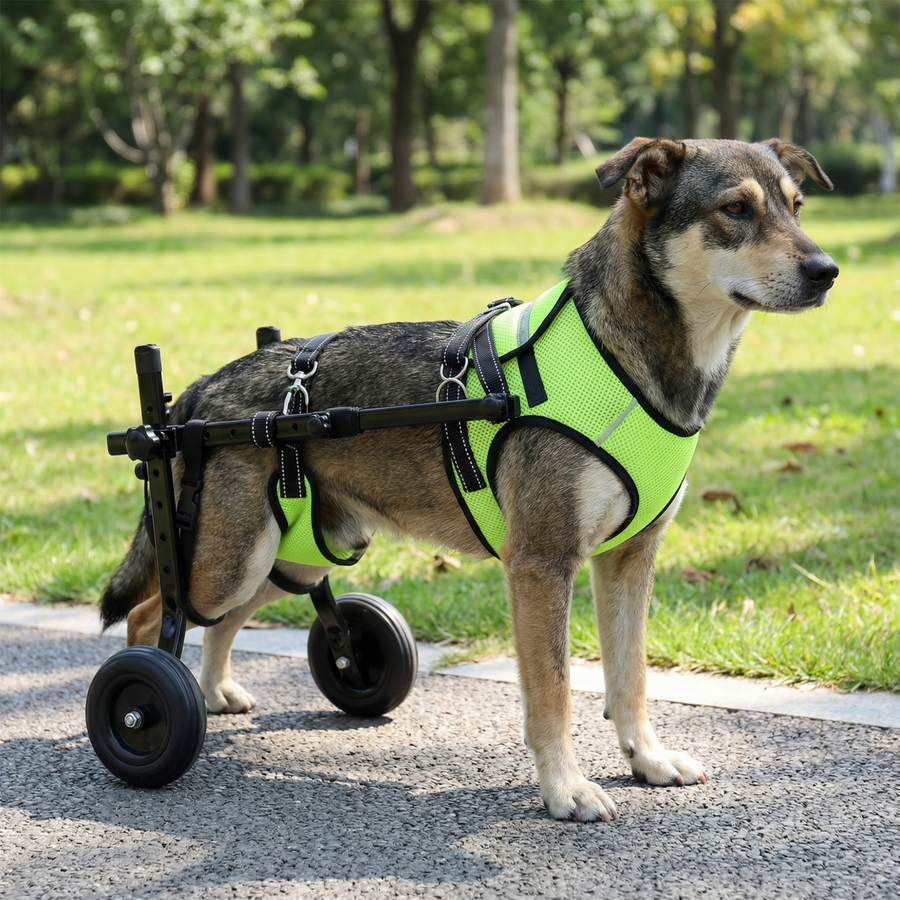
Adjustable Dog Wheelchair for Back Legs (For Small Dogs)
Price checked: $149.99 USD
Best for: Small dogs whose front legs remain strong enough to steer, pull, and balance while the cart supports the rear body.
- Adjustable front-back length and height for a more natural posture.
- 3D mesh chest and belly support for breathable comfort.
- Shock-absorbing rubber wheels for indoor and outdoor rolling.
- Reflective strip for low-light visibility.
- Available sizes: XS, S, M.
View Adjustable Dog Wheelchair for Back Legs
| Size | Chest girth | Front-to-rear leg distance | Height range | Official page |
|---|---|---|---|---|
| XS | 13.8–16.1 in / 35–41 cm | 4.3–9.3 in / 11–23.5 cm | 6.7–11.8 in / 17–30 cm | Size chart |
| S | 15–17.7 in / 38–45 cm | 5.5–11.8 in / 14–30 cm | 6.7–11.8 in / 17–30 cm | Size chart |
| M | 18.1–22.8 in / 46–58 cm | 7.1–14.6 in / 18–37 cm | 6.7–11.8 in / 17–30 cm | Size chart |
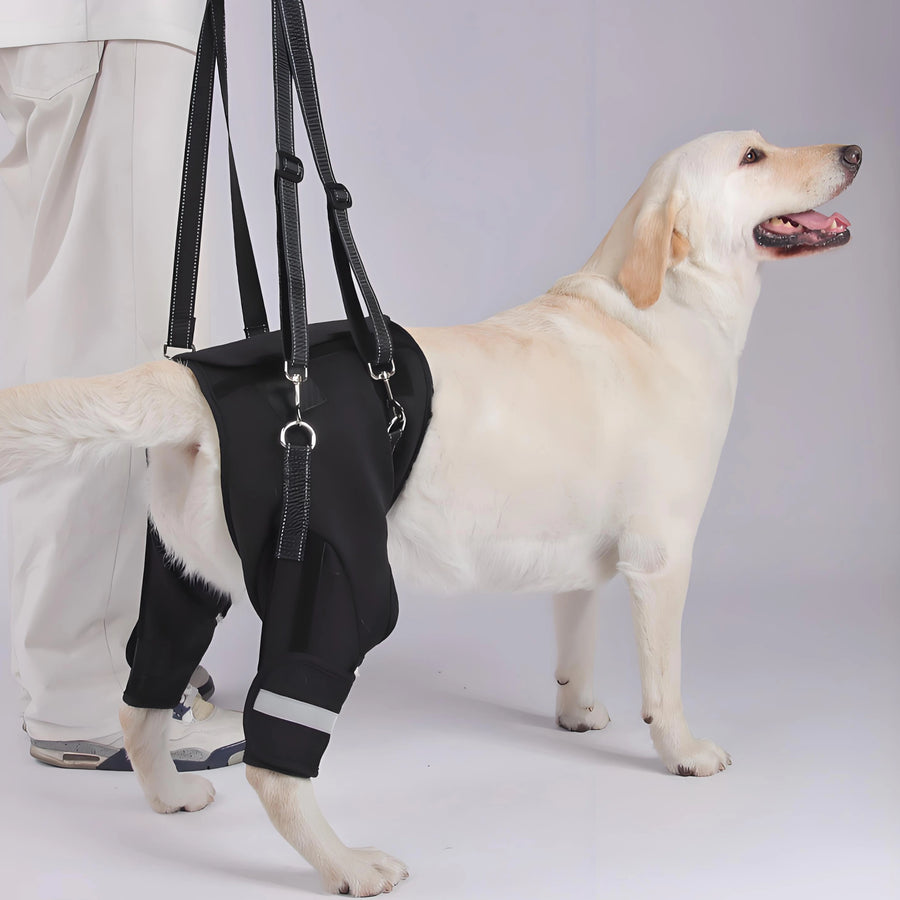
Dog Rear Lift Harness – Hind Leg Support Sling for Senior & Disabled Dogs
Sale price checked: $59.99 USD
Best for: Dogs that can still move but need human-assisted rear support for standing, short walks, stairs, car entry, or post-surgery recovery.
- Rear lift support for weak back legs, arthritis, injury, and recovery.
- Soft, breathable perforated neoprene comfort.
- Secure hook-and-loop closure and strong hardware.
- Padded handle and reflective details.
- Available sizes: S, M, L, XL.
| Size | Waist range | Recommended weight | Use case | Official page |
|---|---|---|---|---|
| S | 13.0–16.9 in / 33–43 cm | 16.5–27.6 lb / 7.5–12.5 kg | Small dogs needing light rear assistance. | Size chart |
| M | 15.7–20.9 in / 40–53 cm | 27.6–44.1 lb / 12.5–20.0 kg | Daily standing, potty, and stair support. | Size chart |
| L | 19.7–27.6 in / 50–70 cm | 44.1–66.1 lb / 20.0–30.0 kg | Medium dogs needing steady hip support. | Size chart |
| XL | 25.6–33.5 in / 65–85 cm | 66.1–99.2 lb / 30.0–45.0 kg | Larger dogs needing assisted rear lifting. | Size chart |
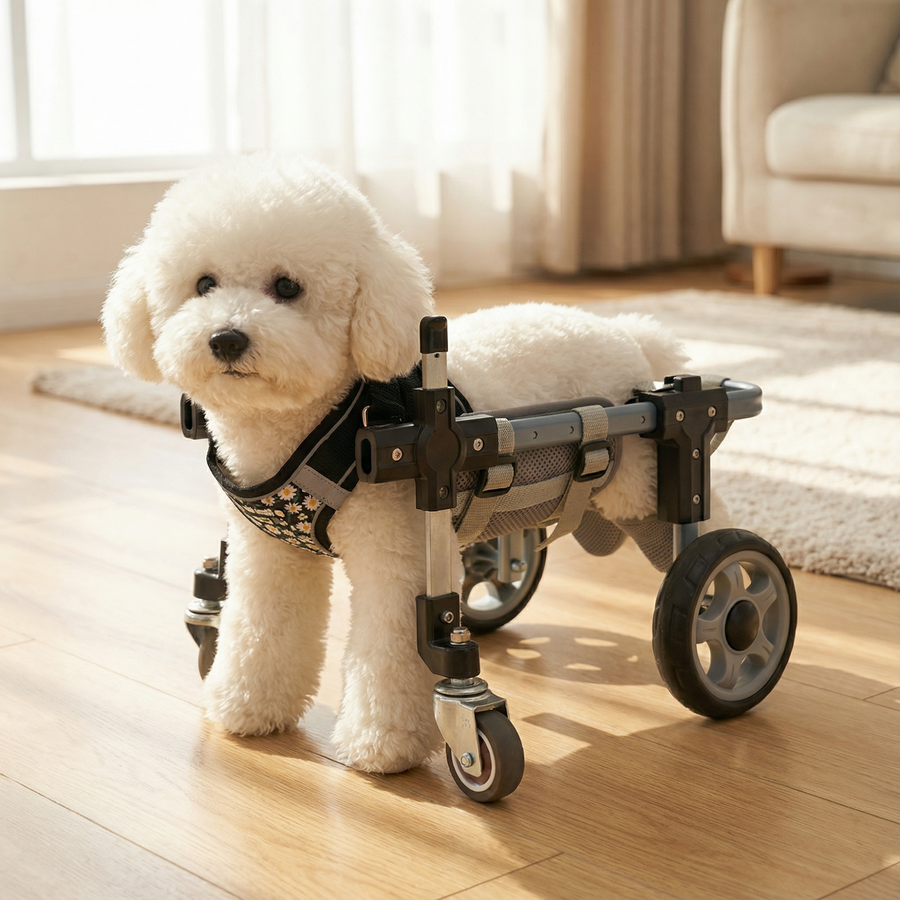
4-Wheel Dog Wheelchair, Full Support Cart for Front & Back Legs
Price checked: $187.99 USD
Best for: Dogs with weakness in both front and back legs, poor balance, tipping, or full-body instability.
- Full-body support with four wheels and front plus rear harness system.
- Lightweight aluminum alloy frame.
- Height, length, and width adjustable.
- Open rear and underside areas for bathroom use.
- Available sizes: XS, S, M, L.
| Size | Body length | Chest girth | Best fit situation | Official page |
|---|---|---|---|---|
| XS | 8.7–10.6 in / 22–27 cm | 12.6–14.6 in / 32–37 cm | Very small dogs needing full support. | Size chart |
| S | 10.2–12.2 in / 26–31 cm | 12.6–14.6 in / 32–37 cm | Small dogs with poor balance or multi-limb weakness. | Size chart |
| M | 11.8–14.6 in / 30–37 cm | 14.2–18.1 in / 36–46 cm | Small-to-medium dogs needing full-body support. | Size chart |
| L | 15.0–18.1 in / 38–46 cm | 16.5–21.7 in / 42–55 cm | Larger small dogs needing stability beyond a 2-wheel cart. | Size chart |

Universal Dog Wheelchair for Front or Rear Legs (2-in-1)
Sale price checked: $299.99 USD
Best for: Owners who want a wheelchair that can be configured for front-leg or rear-leg support as mobility needs change.
- 2-in-1 front-leg or rear-leg support by adjusting wheel positions.
- Hollow aviation aluminum frame with laser welding.
- Push-button height adjustment.
- Dual-bearing shock-absorbing tires.
- Size range: XS through XXL.
How to choose the right support level
Choose by function, not by age alone. A senior dog may need only a rear lift harness for stairs. A younger dog with a spinal condition may need a rear wheelchair. A dog with poor balance in all four limbs may need a full-support cart.
| Your dog’s current ability | Likely support to consider | Why | Where to start |
|---|---|---|---|
| Can walk but needs help rising, stairs, car entry, or potty breaks. | Rear lift harness | Provides hands-on support without putting the dog in a cart. | Dog Rear Lift Harness |
| Back legs are weak, but front legs are strong and the dog still wants to walk. | 2-wheel rear wheelchair | Supports the rear body while the front legs steer and move. | 2-Wheel Dog Wheelchairs |
| Back legs give out and the dog also tips, leans, or struggles to balance. | 4-wheel full-support wheelchair | Supports both front and rear body for better stability. | 4-Wheel Dog Wheelchairs |
| Support needs may change between front and rear use. | Universal 2-in-1 wheelchair | Wheel positions can be adjusted for front-leg or rear-leg support. | Universal Dog Wheelchair |
| Dog is tired, recovering, or should not walk far but still needs outings. | Pet stroller | Transport support, not walking support. | Foldable 4-Wheel Pet Stroller |
For measuring help, use the Dog Wheelchair Fit & Sizing Center. For training time and safe session length, read How Long Can a Dog Stay in a Wheelchair?.
What information to give your vet
A clear, short history helps your vet decide whether the problem is orthopedic, neurologic, painful, traumatic, or systemic.
Write this down before the appointment
- When the back legs first gave out.
- Whether the problem was sudden or gradual.
- Whether one leg or both back legs are affected.
- Whether your dog can stand without help.
- Whether the paws knuckle, drag, cross, or scuff nails.
- Whether your dog cries, pants, trembles, or guards the back.
- Whether peeing and pooping are normal.
- Any fall, jump, rough play, accident, new medication, possible toxin, or tick exposure.
- Current food, supplements, medications, and known diagnoses.
Take two short videos
If your dog can walk safely, record a short video from the side and another from behind on a non-slip surface. Do not force walking if your dog is painful, collapsing, or unable to stand.
FAQ: dog back legs giving out
Why are my dog’s back legs suddenly giving out?
Sudden back-leg weakness can come from spinal disc disease, trauma, nerve injury, severe joint pain, toxin exposure, tick-related illness, blood-flow problems, or another urgent condition. If your dog cannot stand, drags the back legs, has severe pain, or loses bladder or bowel control, call an emergency vet right away.
Is back-leg weakness just old age?
No. Age can increase the risk of arthritis, muscle loss, spinal disease, and degenerative conditions, but “old age” is not a diagnosis. A senior dog whose back legs give out still needs a veterinary evaluation so pain, neurologic disease, injury, and treatable problems are not missed.
Can I help my dog at home if the back legs are weak?
Yes, but only after urgent signs are ruled out. Use non-slip flooring, block stairs, support the rear body with a harness or towel sling for short potty trips, keep walks calm, and record symptoms for your vet. Do not force exercise, and do not give human pain medication unless your vet instructs you to.
When should I consider a dog wheelchair?
Consider a wheelchair when your dog still wants to move but cannot keep the back legs working safely for daily walking. A rear wheelchair is usually for dogs with weak back legs and strong front legs. A 4-wheel wheelchair is better when the dog also has front-leg weakness, poor balance, or full-body instability.
Should I choose a rear lift harness or a wheelchair?
Choose a rear lift harness for short, hands-on assistance such as standing, stairs, car entry, and potty breaks. Consider a wheelchair when your dog needs supported walking for longer daily movement and the veterinarian says cart use is appropriate.
Can dogs pee and poop in a wheelchair?
Most dog wheelchairs are designed with open areas around the rear and underside so dogs can urinate and defecate while supported. Fit and height adjustment matter, so watch your dog during the first few sessions and adjust if toileting looks uncomfortable.
How long can a dog stay in a wheelchair?
Start with short, supervised sessions and build gradually. Many dogs begin with just a few minutes at a time. Remove the wheelchair for sleep, long rest, unsupervised time, fatigue, rubbing, or any sign of distress.
What should I do if my dog’s back paws are knuckling?
Knuckling means the paw folds under or the dog walks on the top of the paw. This can suggest poor paw-position awareness and possible nerve or spinal involvement. Call your veterinarian, and treat sudden knuckling or worsening weakness as urgent.
Help your dog move more safely
Start with your dog’s real support need: rear-leg help, full-body stability, assisted lifting, or transport. Measure carefully, confirm fit, and choose support that helps your dog move without slipping, rubbing, or overworking the front legs.
Get the Fit & Sizing Guide View Rear-Leg Wheelchairs View 4-Wheel Wheelchairs View Mobility Accessories